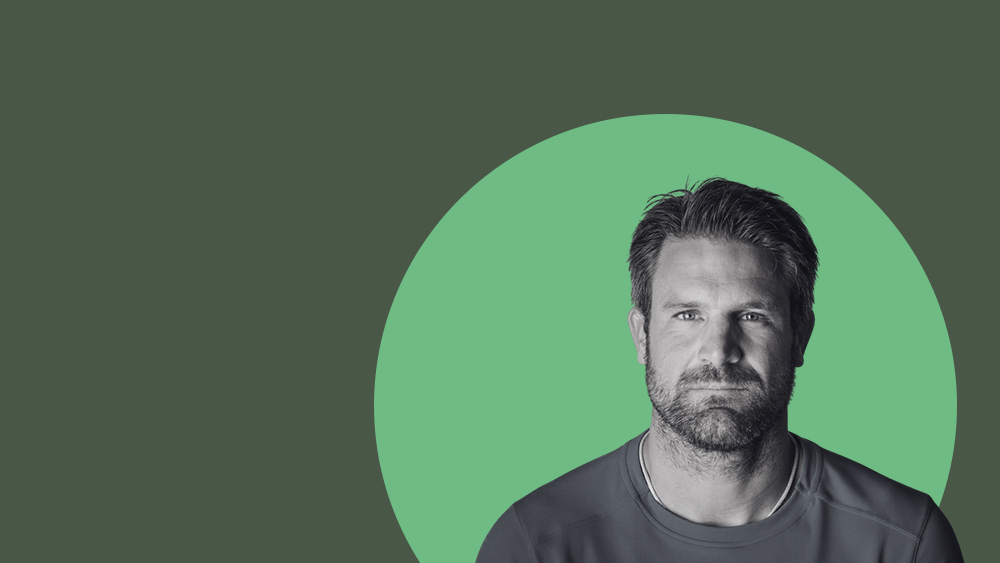
What if you spend 22 years in survival mode? It’s exactly what happened to Ramon van den Heuvel, currently department head at the Dutch Tax Administration. In the winter of 1992, he cycles home from a holiday job together with his twin brother and a friend. The group is hit from behind. Ramon wakes up in the hospital two weeks later. His spleen has been removed. His leg is severely damaged. And his foot starts twisting to such an extent that he can barely walk anymore.
Ramon switches into survival mode, in which he stays for 22 years. Immediately after the accident, he tries to ignore his physical disability and pain as much as possible. Five years later, he is forced to undergo surgery. A few years later, his wife’s kidneys fail, shifting Ramon’s focus from himself to his spouse. The care process lasts 13 years. Only when his wife undergoes a successful kidney transplant, Ramon is able to open up his mind to – with the help of a rehabilitation program – get out of survival mode and start living again.
Watch the whole episode on YouTube or listen to it in your favorite podcast app, like Spotify or Apple Podcasts.
Ramon’s lessons in personal leadership
From survival mode to conscious leadership – In crisis situations, people often switch to short-term survival mode. They take things day by day. Conscious leadership emerges when you step out of that reactive mode and take active control of your choices and future once again.
Ownership and accepting consequences – Ramon emphasizes that when you make a decision, you must also fully accept the associated risks and consequences. This requires mental strength and taking real responsibility for your own actions.
Integrating ratio and intuition (gut feeling) – Effective leadership does not rely solely on rational analysis. In complex decisions where little information is available, it is essential to trust intuition and gut feeling.
Ramon’s view on team development
Asking for and accepting help – Nobody is resilient on their own. When issues become complex, the individual mind falls short and you need the team. True resilience arises from having the courage to ask for and accept help.
Focus on the team process – Strong teams do not only achieve results, but also take genuine pleasure in the mutual group process and dynamics.
Growing through crises together – Shared setbacks and caring for one another build deep trust and an indestructible bond within a group.
The importance of psychological safety
Preventing ‘festering’ – When there is a lack of openness and people avoid difficult topics or suppress their feelings, things keep “festering” beneath the surface. This creates a suboptimal work environment and hinders peak performance.
Genuine connection as a foundation – Psychological safety and genuine connection form the foundation for collaboration. Only when that connection exists can you hold each other accountable for responsibilities based on trust and respect.
Breaking patterns through experiential learning – Teams and organizations often get stuck in ingrained dynamics. By consciously stepping out of the comfort zone, gaining experiences, and reflecting on them (as in Kolb’s learning cycle), entrenched patterns can be broken sustainably.
Don’t forget to subscribe to Achieve the Impossible in your favorite podcast app,
like Spotify or Apple Podcasts.